sampling

Why Shrinking and Stretching Signals Isn’t Just About Speed: The Real Power of Downsampling and Upsampling
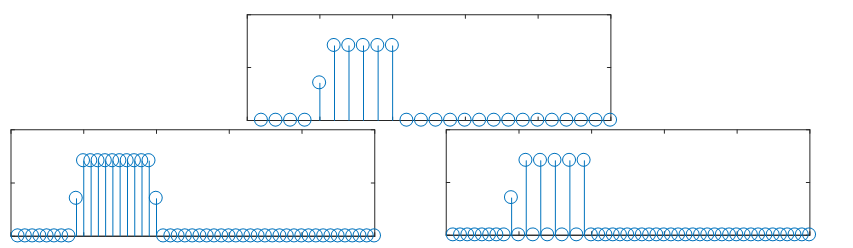
If you’ve ever fiddled with the playback speed on a YouTube video or compressed an audio file to save space, you’ve seen the effects of downsampling and upsampling in action. But here’s the thing: changing a signal’s sampling rate isn’t just about time or file size.

In digital signal processing (DSP), downsampling and upsampling are fundamental building blocks—not just for compression or rate conversion, but for reshaping the way we filter and analyze signals. They’re mathematical lenses that let us zoom into or abstract away different parts of a system.

So yes, shrinking and stretching signals is cool. But if you think that’s all they do, you’re missing the bigger picture.
FIR vs. IIR: The Great Filter Design Debate and Why It Still Matters

Let’s face it: most students encounter filters in their first digital signal processing (DSP) course as theoretical constructs—lines of equations, plots of magnitude response, and vaguely threatening phase diagrams.

But in practice, filter design is one of the most critical tasks in digital signal processing, and the decisions you make—FIR or IIR? Windowing or bilinear transform?—can shape whether your application sounds smooth, runs fast, or falls apart in a haze of numerical instability.

This article is your signal-processing decoder ring. We’ll walk through the why and how of FIR and IIR filter design, demystify common design techniques like windowing and the bilinear transform, and help you build intuition for choosing the right method—not just for an exam, but for the real world.

Cascade Form

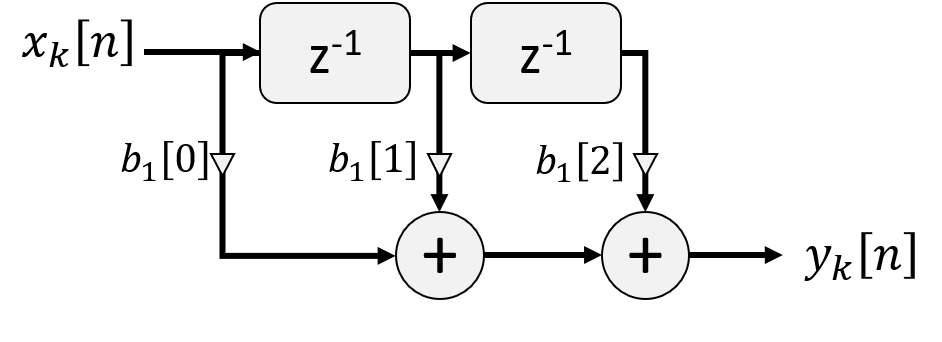
One Filter, Many Forms: Why DSP Engineers Rebuild the Same Filter Over and Over Again

If you’re knee-deep in a graduate-level digital signal processing (DSP) course, you’ve probably designed a filter or two. You’ve plotted poles and zeros, wrangled a transfer function, maybe even written some MATLAB to test a low-pass filter on a noisy signal.

Then someone tells you:
“Great filter. Now pick your structure.”

Wait—what?

Isn’t a filter defined by its difference equation or transfer function? Isn’t that enough?

Short answer: no.

The long answer is what this article is about. Because when you move from the page to the real world—whether it’s a microcontroller, a medical device, or a machine learning pipeline—how you implement a filter matters just as much as what the filter does.

Fast Fourier Transform

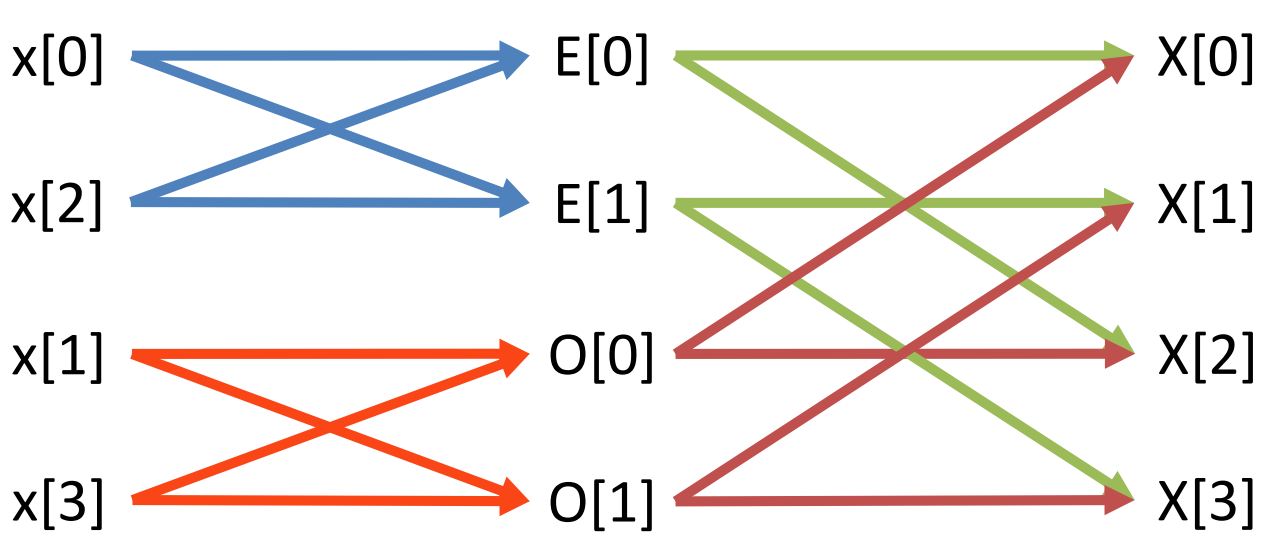
Fast, Furious, and Fundamental: The Untold Depth of the Fast Fourier Transform

We tend to treat algorithms as transient tools—clever bits of logic that solve specific problems and then fade into the background. But the Fast Fourier Transform, or FFT, is not that kind of algorithm.

The FFT isn’t just a fast way to compute a Fourier transform. It’s a cornerstone of digital signal processing, and by extension, of modern computation. It’s the engine beneath your voice assistant’s signal chain, the speed behind your MRI scanner’s image reconstruction, and the unsung hero of everything from wireless communication to deep learning.

Yet for many, the FFT begins and ends with a textbook diagram of a radix-2 butterfly. That’s a shame, because the FFT is both deeper and more diverse than its most famous form.

Let’s explore what the FFT really is, how it goes beyond radix-2, and why it remains one of the most influential ideas in the applied mathematical sciences.

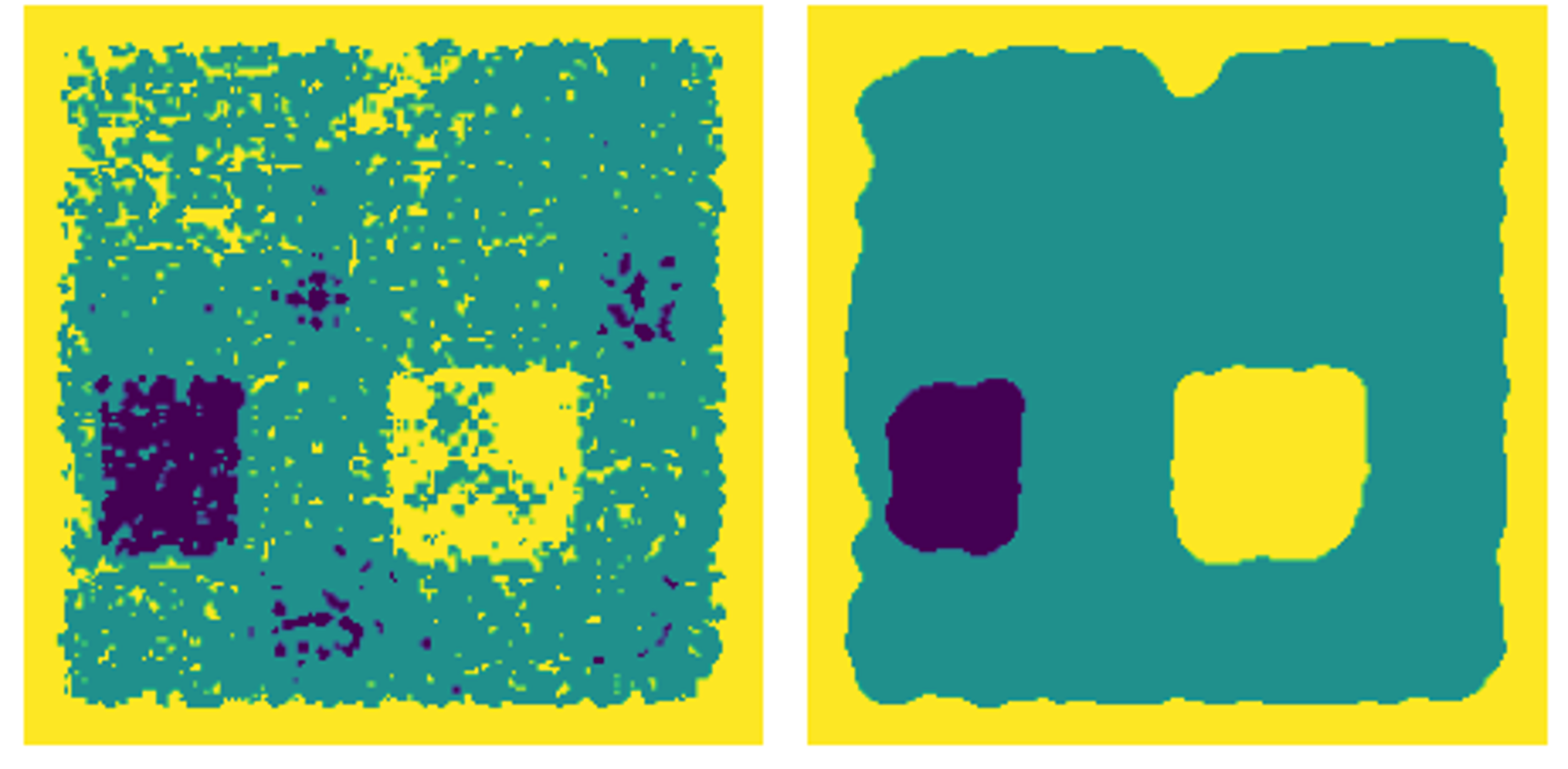
Nondestructive evaluation thresholding

The DSP Survival Guide: What You Really Need to Know for the Midterm

If you’re in the middle of a graduate-level digital signal processing course, congratulations: you’re officially in deep. By now, you’ve wrestled with delta functions, decoded difference equations, squinted at z-plane plots, and maybe even cursed at a phase response graph that made no intuitive sense.

Your exam is coming. You’re reviewing the notes. It’s overwhelming. So here’s a better idea: let’s walk through the big ideas, the ones that actually matter—and not just because they’re on the test. These are the concepts that form the backbone of digital signal processing, and understanding them doesn’t just help you pass a midterm. It gives you tools to analyze the world.

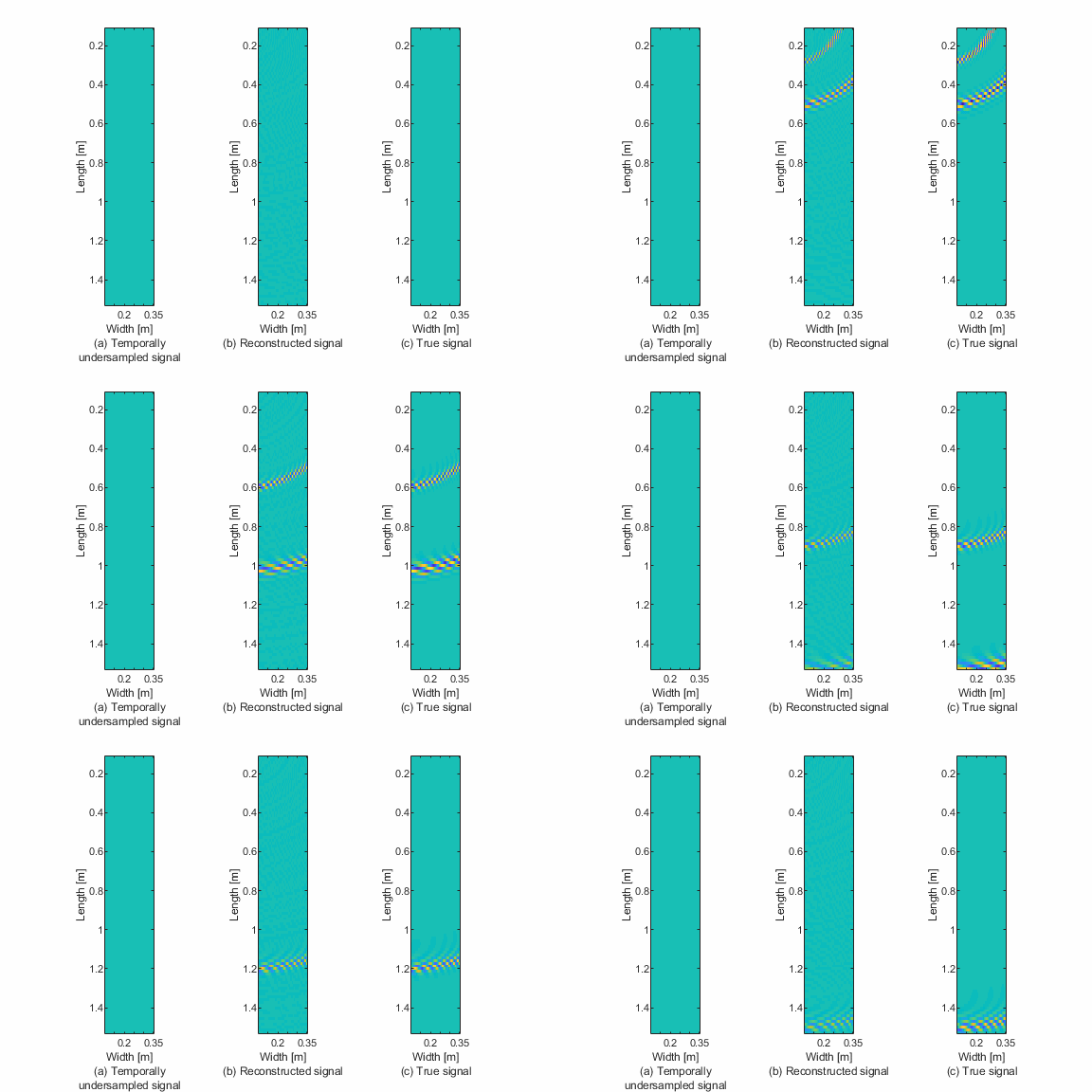
Lamb Waves Animation

Beyond the Grid: Why Non-Uniform Sampling Is the Secret Weapon You Didn’t Know You Needed

If you’ve ever taken a signal processing class, you know the first law of the land: sample uniformly, and sample fast enough. The Nyquist-Shannon Sampling Theorem reigns supreme. Uniform sampling is neat. Predictable. And it makes math work like magic.

But here’s the twist: the real world doesn’t always cooperate.

Sensors drift. Heartbeats don’t occur on a grid. Electrode measurements in the brain arrive irregularly. Seismic pulses bounce back whenever they feel like it. Welcome to the untamed frontier of non-uniform sampling, where the old rules don’t exactly apply—but where understanding those rules becomes more important than ever.

This article is for grad students stepping into advanced digital signal processing. You already know the beauty of ideal sampling. Now, get ready to embrace its imperfections—and see how non-uniform sampling is not just a glitch, but a feature in disguise.

Lamb Waves

The Hidden Half of Every Signal: Why Phase Response Deserves Your Attention

In every signals and systems class, you learn to take a signal, pass it through a system, and analyze what comes out. Somewhere along the way, you’ll graph a frequency response, plot the magnitude (how much each frequency is amplified), and probably move on without giving much thought to the other half of the story: the phase.

That’s a mistake.

Because while the magnitude response tells you how much, the phase response tells you when—and when it comes to how systems behave, especially in real time, when can be everything.

Phase might seem like a minor detail at first, an optional subplot to the main storyline of system behavior. But dig a little deeper, and you’ll find that phase isn’t just important—it’s essential. In signal processing, control systems, AI, medical imaging, and even virtual reality, knowing the phase response can make or break your design.

So let’s set the record straight. This article is your guide to understanding why phase matters, where it matters, and how to start seeing it not as an afterthought, but as a powerful tool.

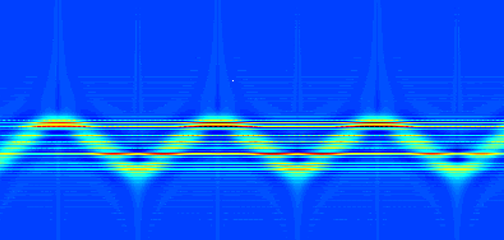
Time-frequency linear modulated signal

The Frequency Is the Feature: Why Every Modern Engineer Should Master the Fourier Transform

Imagine a symphony playing in a concert hall. Now imagine being able to isolate the violin from the rest of the orchestra, pull out just the cellos, or turn up the oboe solo like you’re adjusting sliders on a digital soundboard. That’s the magic of the Fourier transform—it breaks down complex signals into simpler pieces, telling you what frequencies are inside and how much of each is present.

But here’s the thing: the Fourier transform isn’t just for audio engineers or musicians. It’s everywhere—from how we compress images and videos, to how we train machine learning models, to how doctors interpret brain signals or engineers model vibrations in bridges. It’s one of the most fundamental tools in the entire engineering toolbox. And if you’re a student learning it now, you’re stepping into a world where thinking in frequency is just as important as thinking in time or space.

Let’s unpack what makes the Fourier transform so powerful—and why it’s still driving innovation in fields you might not expect.