Hot Tech for Cold Cancers: How Microwave Imaging Is Reinventing Breast Screening
Microwave Imaging

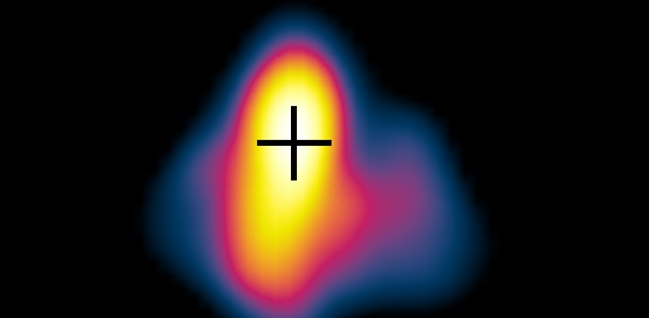
Picture your chest as a crowded subway car: packed, complicated, and full of different signals—some harmless, others alarming. Traditional mammography snapshots it like a grainy train schedule. Enter microwave imaging, which floods this crowded space with gentle electromagnetic pulses (1–10 GHz), listens to how they bounce back, and pieces together a map of tissue properties. It’s like a radar that detects suspicious riders without shaming them for squeezing on too tight.

Microwave imaging for breast cancer combines electromagnetics, inverse problems, and signal processing—a playground for math nerds who want to turn reflections into medical breakthroughs. And behind much of this progress are longtime efforts at McGill University and newer advances from the University of Utah. Let’s unpack how it all works—and why it’s still struggling to go mainstream today.
When Grain Growth Models Don’t Grow Real Grains

Gator Microstructure

Picture a bustling medieval city: houses of all shapes, roads interweaving unpredictably, and gates that won’t budge because of stubborn gatekeepers. That’s exactly what modeling mesoscale grain growth feels like—chaotic, unpredictable, and utterly maddening. Sure, we have tools like phase-field, Monte‑Carlo Potts, and cellular automata to simulate this thermal dance at the grain level. But each has quirks that make them fall short of mimicking real-world materials.

When Matrices Bend Reality: Unlocking Waves with Metric Spaces and Pseudo‑Hermitian Algebra

Anisotropic Guided Wave Wavefield

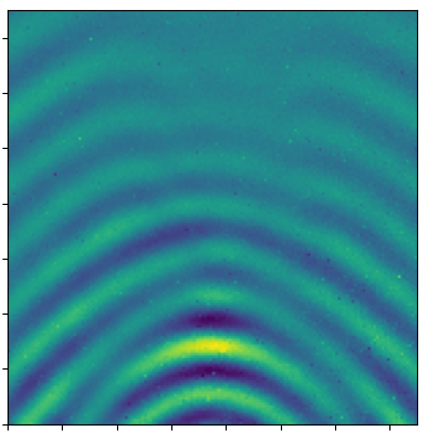
Think of a symphony where each instrument plays in perfect harmony. Now imagine that hall bending and warping the music—notes stretch, shift, harmonics twist. That’s akin to how metric spaces, pseudo-symmetric, and pseudo-Hermitian matrices are transforming how we understand wave dynamics in warped environments—from quantum realms to engineered metamaterials.

When AI Runs Dry: The Challenge of Training Models on Sparse Medical & Biomechanical Data

OpenSim Hand

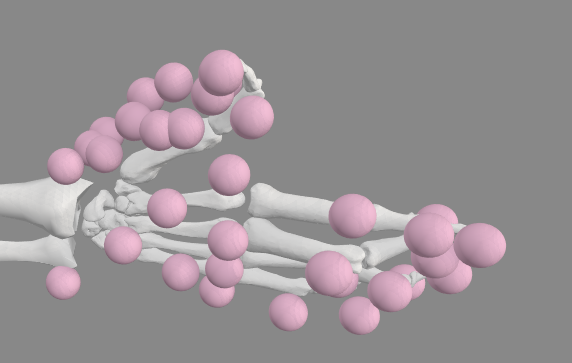
We all love the idea of AI diagnosing diseases from a single MRI scan or powering exoskeletons that move as naturally as we do. But guess what? These applications often falter because there’s simply not enough data—or the data is imbalanced, messy, and hard to collect. In medicine and biomechanics, training robust AI models is more like playing chess blindfolded: with limited pieces, incomplete vision, and a big risk of making the wrong moves.

When AI Says “Maybe”: The Quest for Meaningful Uncertainty in Machine Learning

Biomechanics Research

In the realm of artificial intelligence (AI), particularly within machine learning (ML), the ability to quantify uncertainty is paramount. As AI systems increasingly influence critical decisions in fields like healthcare, engineering, and finance, understanding the confidence of these systems becomes essential. Yet, translating the abstract probabilities of AI models into actionable insights remains a significant challenge.

Why AI Can’t Yet Grow a Perfect Crop Model

Agriculture Decision Support Interface

Imagine trying to beat Elden Ring with only half the map, no health potions, and a sword that breaks every few swings. That’s roughly the challenge agricultural scientists face when applying artificial intelligence (AI) to crop modeling.

Crop models—like the venerable Decision Support System for Agrotechnology Transfer (DSSAT)—simulate plant growth, soil chemistry, and environmental interactions. They’re essential tools for predicting yields, managing fertilizers, and preparing for climate change. But these models are only as good as their inputs, and in agriculture, data is often scarce, noisy, or incomplete.

Why AI Struggles to Crack the Code of Nondestructive Testing

Ultra High Performance Concrete

There’s a common trope in science fiction: an all-seeing machine, unblinking and exact, scanning the world for flaws we can’t detect. In the real world of nondestructive testing (NDT)—the science of using sensors to find cracks, corrosion, and hidden damage in everything from aircraft wings to oil pipelines—that dream still feels frustratingly out of reach.

We have artificial intelligence that can beat world champions at Go, generate Hollywood-quality dialogue, and diagnose rare diseases from pixelated scans. And yet, when we point these same tools at ultrasonic signals or thermographic images from NDT inspections, the results are… inconsistent at best.

When Biomechanics Meets Reality: The OpenSim Simulation Gap

Biomechanics Research

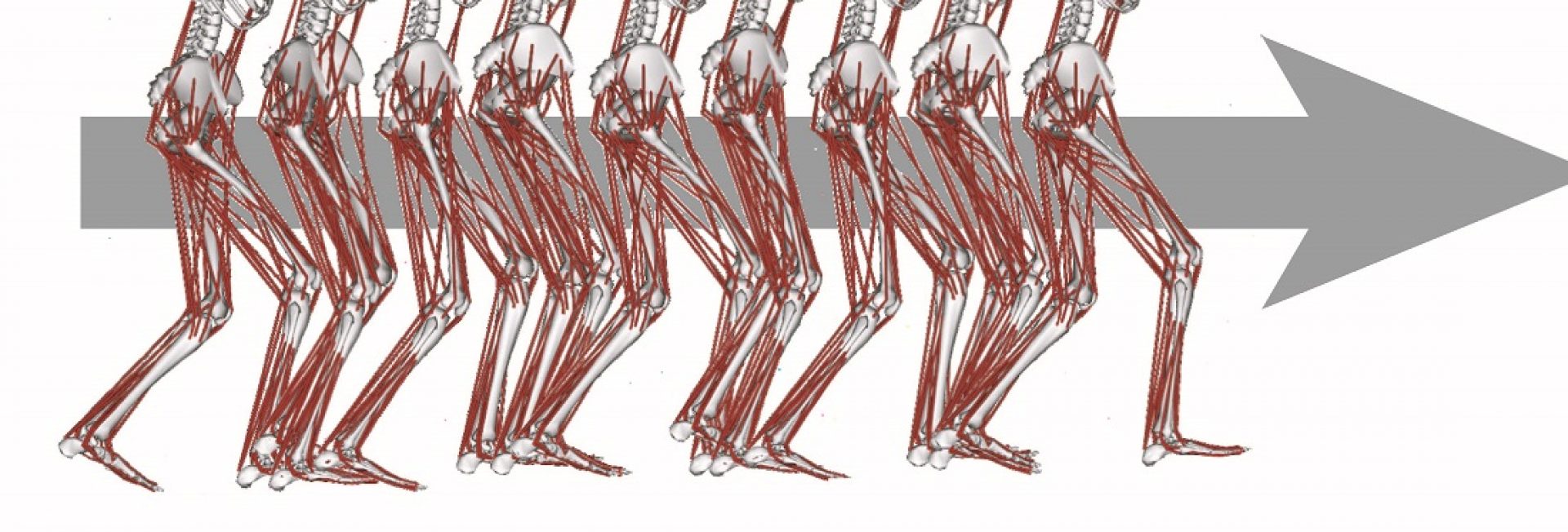
In the realm of biomechanics, OpenSim stands as a cornerstone—a powerful, open-source simulation engine that enables researchers to model and analyze musculoskeletal dynamics. From studying gait patterns to designing prosthetics, OpenSim has been instrumental in advancing our understanding of human movement.

Yet, as with any model, there exists a gap between simulation and reality. Recent studies have highlighted discrepancies between OpenSim’s predictions and actual sensor data, raising questions about the fidelity of these simulations. This divergence, often referred to as the “sim-to-real gap,” underscores the challenges inherent in accurately modeling complex biological systems.

When Grains Go Rogue: Rethinking Microstructure Growth in Materials Science

Gator Microstructure

New experiments challenge decades-old models of grain growth, revealing a more chaotic—and fascinating—reality.

In the world of materials science, grain growth has long been considered a well-understood process. The prevailing theory posits that, over time, the tiny crystalline grains within a metal or ceramic coalesce and grow, driven by the reduction of total grain boundary area—a process akin to soap bubbles merging to minimize surface tension. This phenomenon, often described by the mean curvature flow model, suggests a smooth, predictable evolution of microstructures.