
Localization

The Inner Product: The Most Important Math You’re Already Using Without Realizing It

If you’ve ever used Spotify, trained a neural network, filtered an image, or Googled anything—you’ve relied on an idea so fundamental it barely gets named in everyday conversation: the inner product.

It’s not flashy. It’s not mysterious. It’s certainly not trending on TikTok. But the inner product—also known as the dot product—is quietly powering the smartest algorithms and signal tools in existence. It’s the mathematical handshake that lets one signal say, “Hey, you look a lot like me.”

If you’re a student wondering what separates hand-wavy intuition from real-world results in signal processing, data science, or machine learning, this article is your invitation to take the inner product seriously—and see how it shows up almost everywhere.
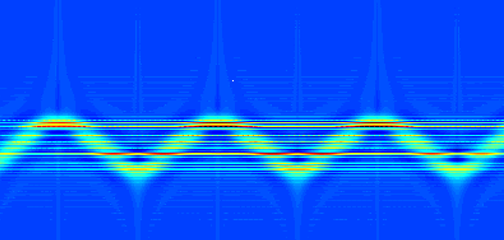
Time-frequency linear modulated signal

Why Everyone Should Learn a Bit of Signal Processing

If you’ve ever adjusted an Instagram filter, used noise cancellation on a plane, or asked Siri to play Taylor Swift, then you’ve used signal processing—the mathematical art of massaging, analyzing, and extracting meaning from data that changes over time. It’s behind your music, your fitness tracker, your MRI scan, and maybe even your job application. And while it might sound like an electrical engineer’s pet topic, signal processing is actually a foundational—and surprisingly flexible—tool across tech, science, and modern careers.

So if you’re a student wondering what to do with that Fourier Transform assignment, or why your professor keeps talking about “filtering out noise,” read on. Signal processing isn’t just useful—it’s everywhere.